10 February 1944 — the bombing of Propaganda Fide.
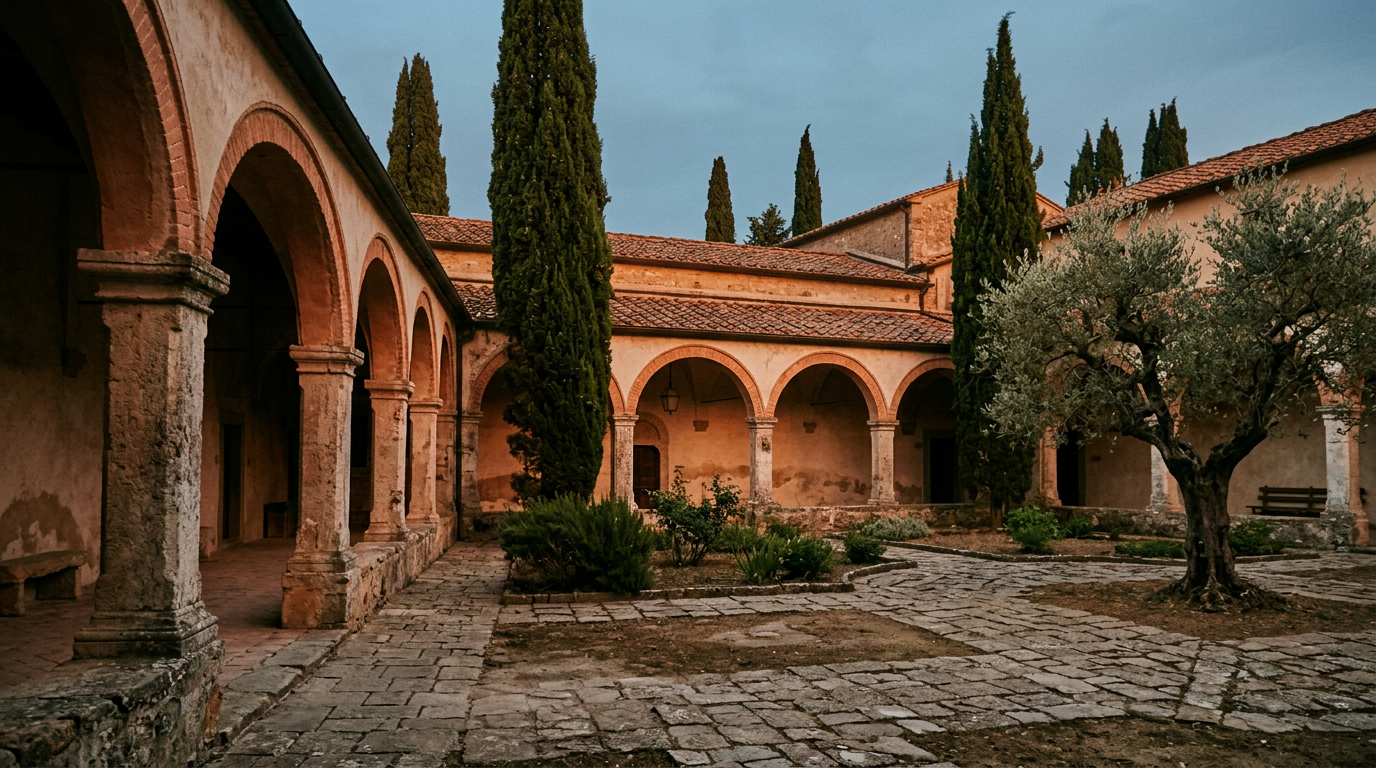
On 10 February 1944, shortly after nine in the morning, Allied bombers struck the College of Propaganda Fide inside the Papal Villas of Castel Gandolfo, neutral territory where thousands of civilians had sought shelter. More than five hundred people lost their lives. It is the most painful page of the war in the village, and every year the community returns to remember it.
The front reaches the Castelli
After 8 September 1943 the people of Castel Gandolfo and neighbouring towns, in panic, had already taken refuge once in the Papal Villas, protected by the extraterritorial privileges recognised by the Lateran Pacts ([Vatican City State](https://www.vaticanstate.va/en/other-bodies/castel-gandolfo.html)). With the Anglo-American landing at Anzio on 22 January 1944 the Castelli Romani became the rear of the front: Genzano was bombed on 30 January, Albano and Ariccia on 1 February, Marino on 2 February. In Genzano more than 80 per cent of homes were destroyed or badly damaged ([Wikipedia](https://it.wikipedia.org/wiki/Bombardamento_di_Propaganda_Fide)).
On 25 January 1944, at the wish of Pius XII, the Papal Villas opened their gates. The reception was coordinated by Monsignor Giovanni Battista Montini, the future Paul VI, and by Emilio Bonomelli, director of the Villas ([Vatican News](https://www.vaticannews.va/it/vaticano/news/2024-02/castel-gandolfo-1944-mostra-bombardamenti-pio-xii-musei-vaticani.html)). The people of Castel Gandolfo were housed in the Apostolic Palace, those of Albano in the summer villa of Propaganda Fide; thousands more in huts and tents set up in the gardens ([Castel Gandolfo 1944 exhibition dossier](https://www.nyvaticanartpatrons.org/wp-content/uploads/sites/3/2024/05/Castel-Gandolfo-1944.pdf)).
A city of refugees
By early February there were over twelve thousand refugees. An improvised city took shape, with infirmaries, a maternity ward, a distribution of soup, bread, meat and potatoes, and a committee for the destitute ([exhibition dossier](https://www.nyvaticanartpatrons.org/wp-content/uploads/sites/3/2024/05/Castel-Gandolfo-1944.pdf)). Rooms, halls, staircases and even the cryptoporticus of Domitian's villa were filled with entire families. Pius XII gave his own apartment over to expectant mothers: 36 children were born in the Pope's bedroom according to Vatican News, about forty according to the Governorate, among them twins named Eugenio Pio and Pio Eugenio ([Vatican News](https://www.vaticannews.va/it/vaticano/news/2024-02/castel-gandolfo-1944-mostra-bombardamenti-pio-xii-musei-vaticani.html), [Vatican City State](https://www.vaticanstate.va/en/other-bodies/castel-gandolfo.html)).
The morning of 10 February
Hope lasted barely fifteen days. On 10 February, at around 9.15, two waves of bombers hit the College of Propaganda Fide and Villa Barberini, well inside the extraterritorial zone ([Vatican News](https://www.vaticannews.va/it/vaticano/news/2024-02/castel-gandolfo-1944-mostra-bombardamenti-pio-xii-musei-vaticani.html), [Wikipedia](https://it.wikipedia.org/wiki/Bombardamento_di_Propaganda_Fide)). In the preceding days the convents of the Poor Clares and the Basilian nuns had already been destroyed, killing a number of cloistered nuns: sixteen according to Vatican News, eighteen according to the Governorate.
The death toll was never established, partly because of gaps in the death registers kept at the Court of Velletri. The Vatican Governorate speaks of more than five hundred dead and many wounded; the Municipality counted 211 Castel Gandolfo residents killed; some witnesses spoke of seven hundred and even eleven hundred victims ([Wikipedia](https://it.wikipedia.org/wiki/Bombardamento_di_Propaganda_Fide), [Vatican City State](https://www.vaticanstate.va/en/other-bodies/castel-gandolfo.html)).
“The shelter of hope was turned into a place of sorrow.”Card. Fernando Vérgez Alzaga, February 2024
Accusations and denials
According to the Allies the raid was part of operations to cut German supply lines to Cassino and Anzio; on 5 February the Algiers headquarters had reported a German presence at the Papal Palace. The Holy See flatly denied it: in Washington the apostolic delegate Amleto Cicognani stated, on behalf of Cardinal Maglione, that no German soldier had been admitted within the walls of the villa ([Wikipedia](https://it.wikipedia.org/wiki/Bombardamento_di_Propaganda_Fide)). After the bombing the villa became a makeshift hospital and refugees were gradually moved to Rome, Lazio, Umbria and the Marche; in March and April almost five thousand remained ([exhibition dossier](https://www.nyvaticanartpatrons.org/wp-content/uploads/sites/3/2024/05/Castel-Gandolfo-1944.pdf)). Many stayed until the liberation of Rome on 4 June ([Vatican City State](https://www.vaticanstate.va/en/other-bodies/castel-gandolfo.html)).
Remembrance
Every 10 February the streets of Castel Gandolfo and the Villas are crossed by the Peace March, promoted by the municipalities of Castel Gandolfo and Albano together with the Associazione Storia e Memoria dei Castelli Romani, formerly the association of the victims' families ([exhibition dossier](https://www.nyvaticanartpatrons.org/wp-content/uploads/sites/3/2024/05/Castel-Gandolfo-1944.pdf), [Comune di Castel Gandolfo](https://www.comune.castelgandolfo.rm.it/index.php/it/page/lo-speciale-in-memoria-della-vittime-di-propaganda-fide-e-per-il-giorno-del-ricordo)). On the eightieth anniversary, 10 February 2024, the Governorate opened the exhibition “Castel Gandolfo 1944” in the Papal Palace, curated by Luca Carboni of the Vatican Apostolic Archive: photographs, films, unpublished documents and survivors' testimonies. Its iconic photograph shows a little girl with a bandaged head; only then was her name revealed, Fernanda Scalchi, four years old, who died a few days after the picture was taken ([Vatican News](https://www.vaticannews.va/it/vaticano/news/2024-02/castel-gandolfo-1944-mostra-bombardamenti-pio-xii-musei-vaticani.html)). Admission is included in the Papal Palace ticket.