The Borgo Laudato Si' — the Vatican's ecological experiment.
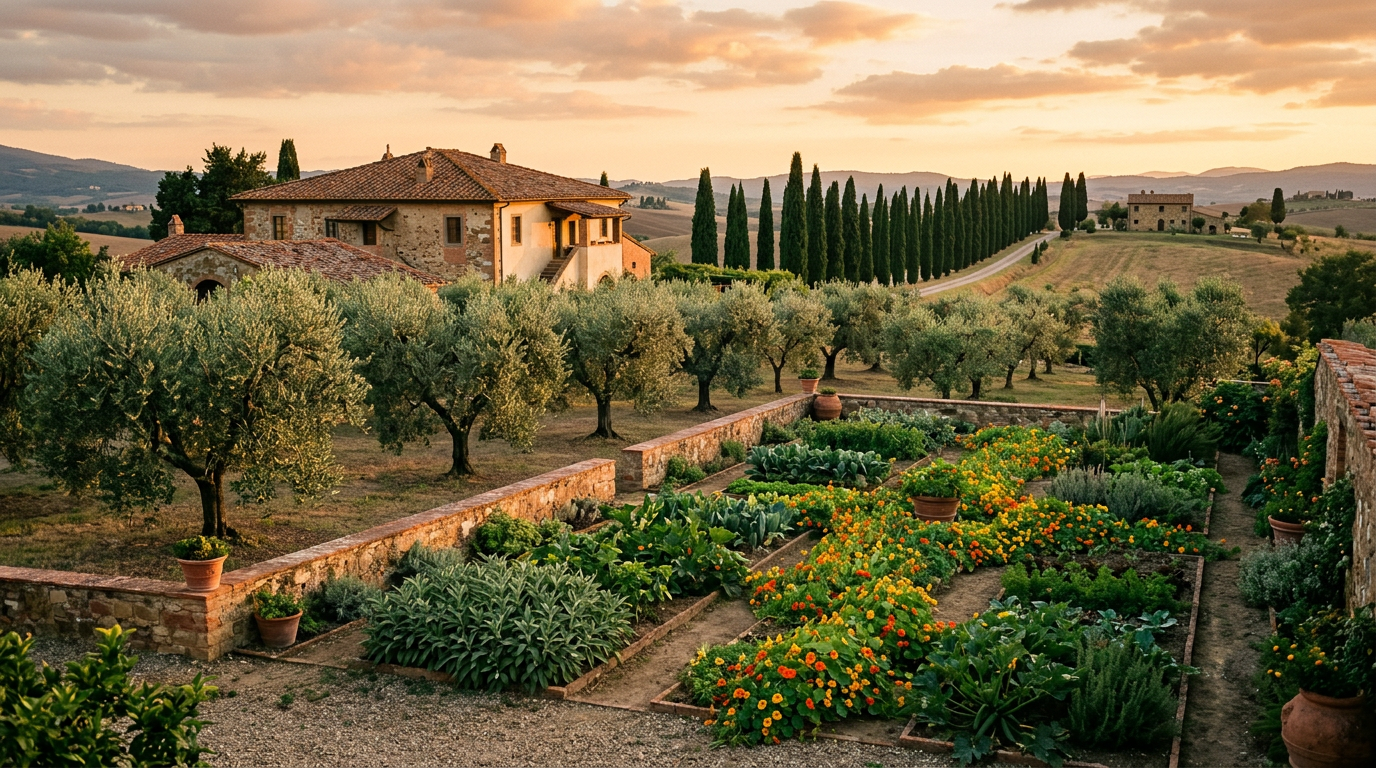
Behind the walls of the Papal Villas, where for centuries popes walked in solitude, olive trees are now cultivated, cows are milked and gardeners are trained. The Borgo Laudato Si' is the latest chapter in Castel Gandolfo's history: 55 hectares turned into a laboratory of integral ecology, open to anyone who wants to see it.
From chirograph to inauguration
The project was born on 2 February 2023, when Pope Francis signed a chirograph to create “a tangible model of thought, structure and action”, a forum for dialogue and an example of change. To run it he established the Laudato Si' Higher Education Centre, a scientific, educational and social organisation with its legal seat in the Vatican and its operational seat in the Papal Villas, under the jurisdiction of the Governorate ([Vatican City State](https://vaticanstate.va/en/state-and-government/structure-of-the-government/directorates/tag-manager/borgo-laudato-si.html)). The initiative does not alter the extraterritorial status of the property, set by the Lateran Treaty.
On 5 September 2025 Leo XIV inaugurated the Borgo. In his homily he called it “a seed of hope” bequeathed by his predecessor, and described what one sees as “a synthesis of extraordinary beauty” in which spirituality, nature, history, art, work and technology live together in harmony ([Holy See, homily of Leo XIV](http://www.vatican.va/content/leo-xiv/it/homilies/2025/documents/20250905-inaugurazione-borgo-laudatosi.html)). The word “borgo”, village, is deliberate: it signals a place of closeness and convivial neighbourliness.
Gardens, fields and farm
The 55 hectares divide into 35 of Italian-style gardens and about 20 of farmland, with 1,500 olive trees, over 3,000 plant varieties, biodynamic vineyards created by the University of Udine and a large greenhouse powered by solar panels. Irrigation is designed to draw as little as possible on nearby Lake Albano ([Vatican News](https://www.vaticannews.va/it/vaticano/news/2026-07/borgo-laudato-si-papa-leone-pranzo-poveri-formazione-cura.html)). The farm is home to cows, horses, donkeys and hens ([USCCB](https://www.usccb.org/news/2025/pope-inaugurates-center-farm-dedicated-zero-waste-inclusive-economy)): among the animals are hens from the island of Java, a Valais Blacknose sheep, a Highland cow and horses given to the Pope by Toledo and Seville ([Vatican News](https://www.vaticannews.va/it/vaticano/news/2026-07/borgo-laudato-si-papa-leone-pranzo-poveri-formazione-cura.html)).
The plan is for farm products, including cheese, olive oil and wine, to be sold to the public under the Laudato Si' label, with profits not enriching a few but flowing back to support programmes and workers ([USCCB](https://www.usccb.org/news/2025/pope-inaugurates-center-farm-dedicated-zero-waste-inclusive-economy)).
“A seed that can bear fruits of justice and peace.”Leo XIV, inauguration homily, 5 September 2025
A place of training
The project rests on three pillars: education in integral ecology, a circular and generative economy, and environmental and social sustainability. The Borgo is open to all, “without distinction of creed, social class or origin”, and aims to become a model of ecological conversion for everyone, including those who do not live an experience of faith, as director general Fabio Baggio explained in 2024 ([Vatican News](https://www.vaticannews.va/it/vaticano/news/2024-07/borgo-laudato-si-castel-gandolfo-papa-francesco-corsi-formazione.html)). Now a cardinal, Baggio leads the Centre together with Father Manuel Dorantes, its administrative director ([USCCB](https://www.usccb.org/news/2025/pope-inaugurates-center-farm-dedicated-zero-waste-inclusive-economy)).
The heart of the Borgo is social. The Centre offers free job-training courses, with internships and placement, in gardening, agriculture, catering and guided tours. They are aimed above all at migrants, refugees, unaccompanied minors, women who have survived violence, unemployed people, people with disabilities and former prisoners ([Vatican News](https://www.vaticannews.va/it/vaticano/news/2026-07/borgo-laudato-si-papa-leone-pranzo-poveri-formazione-cura.html)). The first gardening courses, launched in 2024, lasted 100 or 160 hours, and each participant is supported for a year during their first months at work ([Vatican News](https://www.vaticannews.va/it/vaticano/news/2024-07/borgo-laudato-si-castel-gandolfo-papa-francesco-corsi-formazione.html)).
The Borgo is also a meeting place. From 17 to 19 June 2026 it hosted the first Borgo Laudato Si' Dialogues, an international forum with the University of Notre Dame bringing together business leaders, academics and civil society ([Vatican News](https://www.vaticannews.va/en/vatican-city/news/2026-06/borgo-dialogues-laudato-si-castel-gandolfo-cardinal-baggio.html)). On 11 July 2026 Leo XIV had lunch there with 200 people in situations of hardship, including 35 children ([Vatican News](https://www.vaticannews.va/it/vaticano/news/2026-07/borgo-laudato-si-papa-leone-pranzo-poveri-formazione-cura.html)).
What you see
The visit combines history and landscape: the Italian gardens, the remains of Domitian's villa and the cryptoporticus, about 120 metres long, where the emperor took covered walks ([Vatican News](https://www.vaticannews.va/it/vaticano/news/2026-07/borgo-laudato-si-papa-leone-pranzo-poveri-formazione-cura.html)). The route is built on a “grammar” of 30 keywords drawn from the encyclical, such as water, air, tree, welcome and care ([Vatican News](https://www.vaticannews.va/it/vaticano/news/2024-07/borgo-laudato-si-castel-gandolfo-papa-francesco-corsi-formazione.html)).
How to book
The entrance is on Via Massimo D'Azeglio in Castel Gandolfo. Options include a guided walking tour, a tour by eco-friendly vehicle or a guided group tour, booked online on the official website. From 30 March 2026 the published hours are Monday to Friday 10am to 2pm and Saturday 10am to 4pm, with last entry an hour before closing; winter hours usually change at the end of October, so check before you go. Information: tours@borgolaudatosi.va, telephone +39 06 6988 7835 ([Laudato Si' Centre, tours](https://www.laudatosi.va/visite-aperte-al-pubblico/)).